Birds without Borders: Photo Collection
Bridging the Americas to Protect the North Fork's Migratory Birds
During our 2026 trip to Honduras, wildlife biologist and nature photographer Mary Bertschi documented the region’s extraordinary birdlife, including many species that migrate through or return to breed on the North Fork each spring along the Atlantic Flyway.
This gallery features highlights from that journey, offering a glimpse into the vibrant birds and habitats that connect our communities across borders. The gallery is currently being featured at our headquarters, the Roy Latham Nature Center at Inlet Pond County.
Starting December 12th the exhibit will be at Floyd Memorial Library, 539 1st Street, Greenport, NY 11944. The exhibition will run through February 14th 2027.
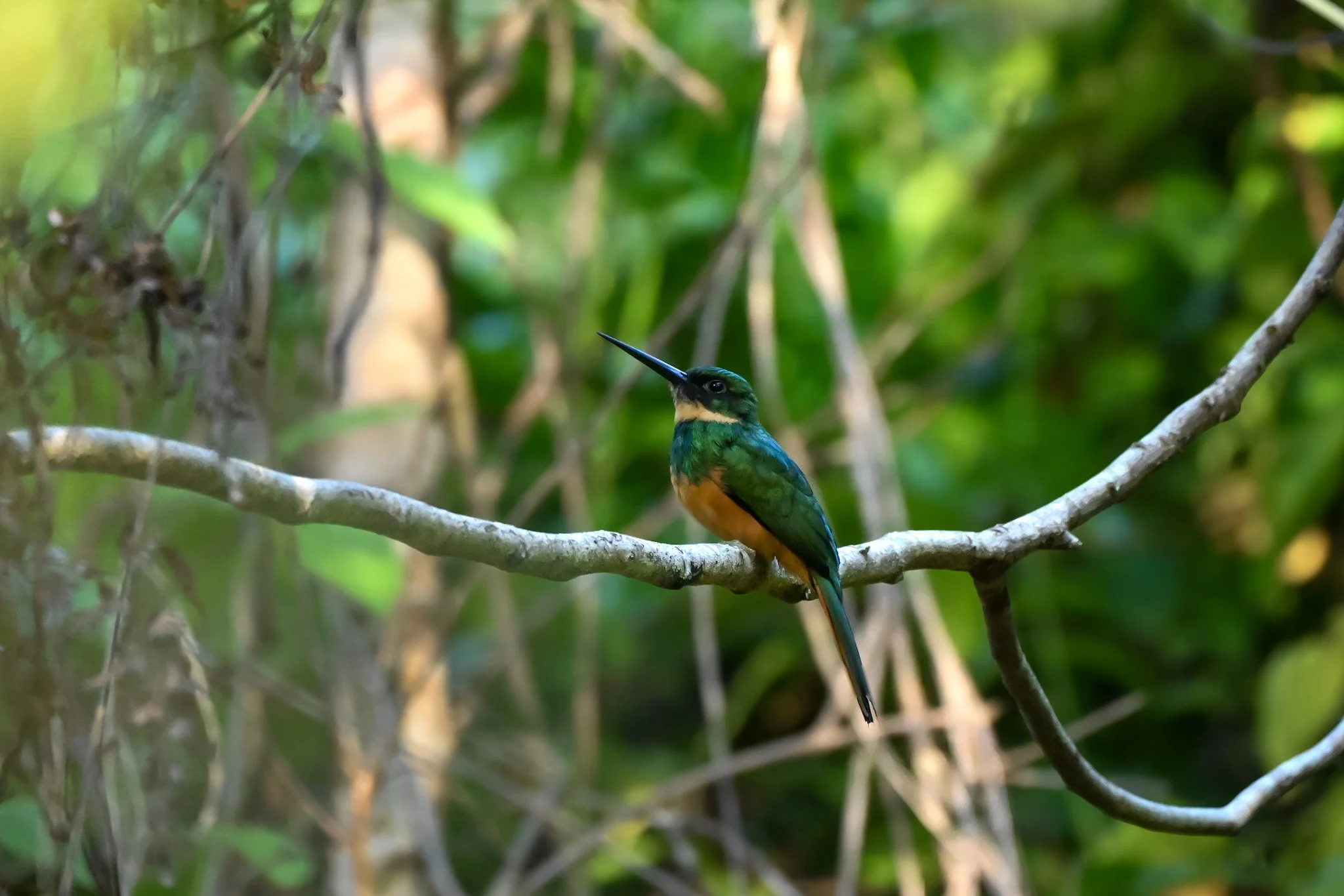
Rufous-tailed Hummingbird
(Pico Bonito)
We stayed at the beautiful Lodge and Spa at Pico Bonito, rich in biodiversity and surrounded by lush rainforests. Pico Bonito stands out as a site with interesting research potential, as there is already a MOTUS tower for tracking birds on site. Hummingbirds were everywhere, such as this Rufous-tailed Hummingbird we saw while walking down from our cabins to breakfast.
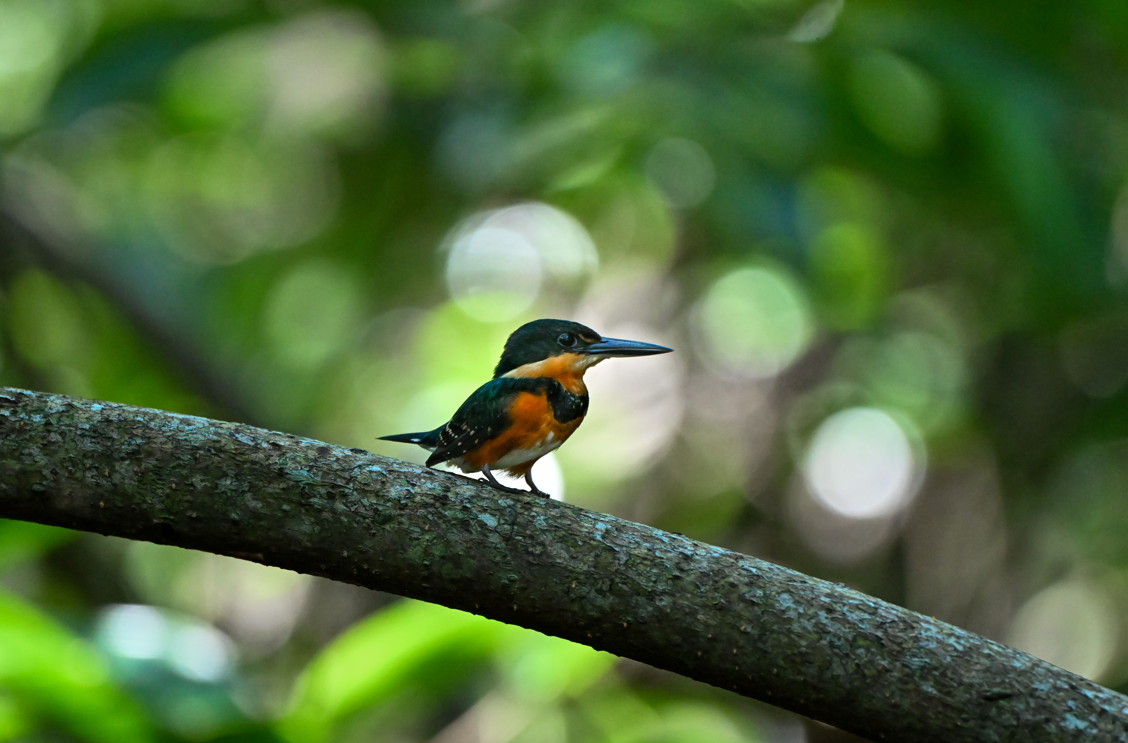
American Pygmy Kingfisher (Cuero y Salado Wildlife Refuge)
Cuero y Salado is a unique coastal wildlife refuge with its own natural beauty and ecosystem. We birded by boat, navigating up the Cuero River through mangrove channels and out toward the delta, moving through diverse and often untouched habitat. The mangroves were a highlight, offering the kind of dense, shadowy waterway that rewards patient observation. The American Pygmy Kingfisher was the star here, resting among the tangled snorkel roots of the mangroves.
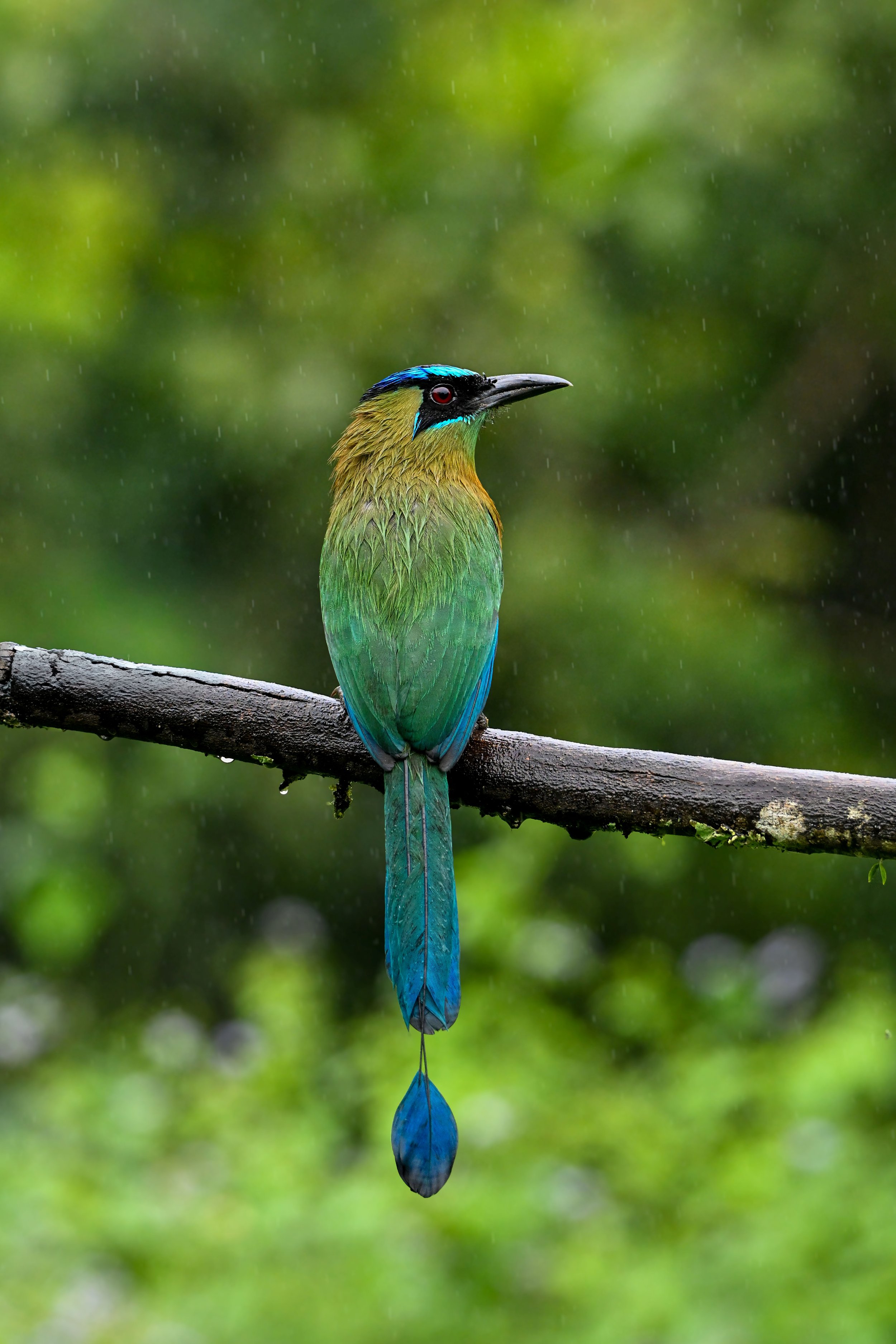
Lesson’s Motmot (Luna del Puente)
It was from the same blind at Luna del Puente that we also saw the Lesson’s Motmot.
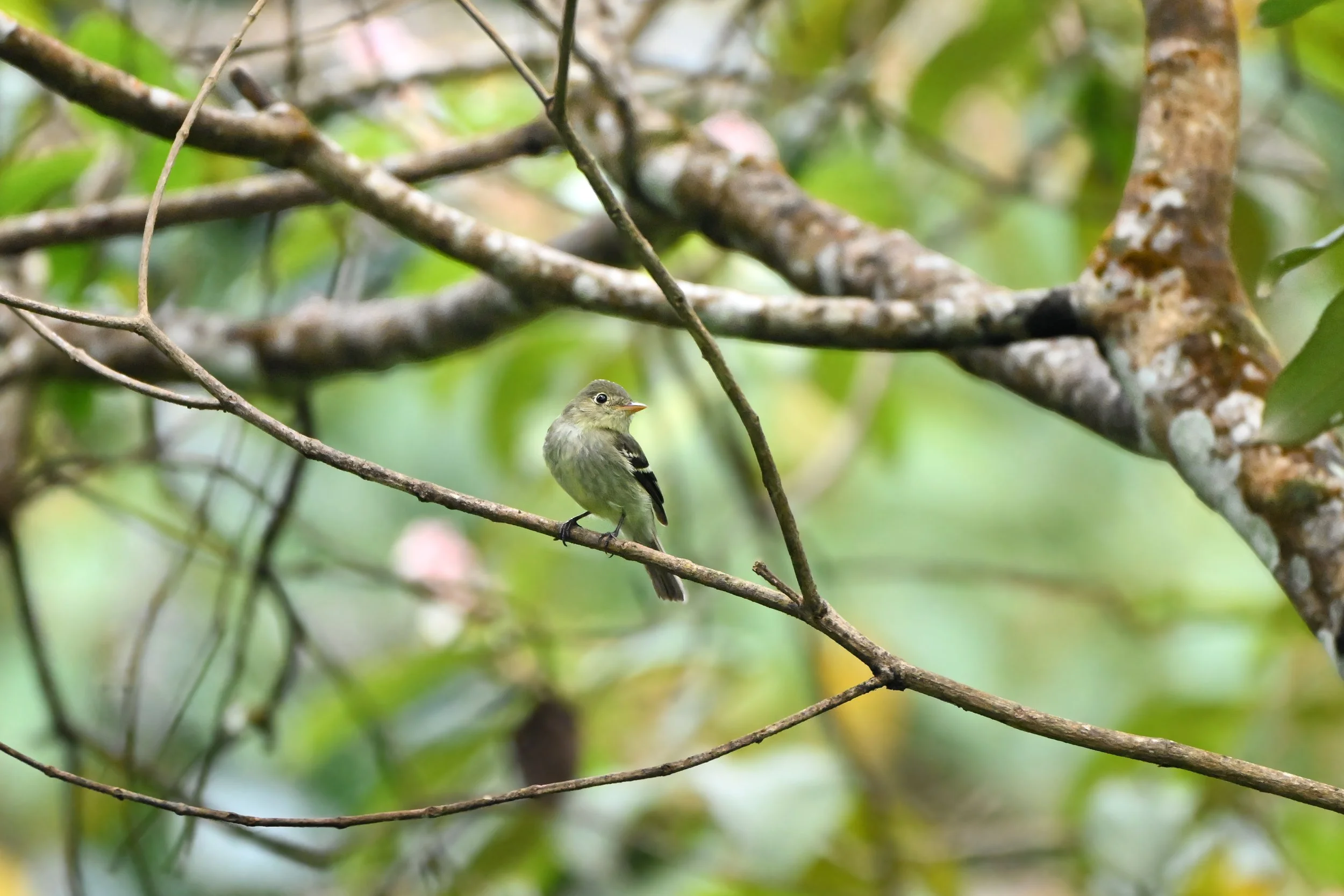
Yellow-bellied Flycatcher (Pico Bonito)
We viewed the Yellow-bellied Flycatcher from the deck at Pico Bonito. This long-distance migrant flies thousands of miles, pausing on Long Island, and then nesting in Northern New England.
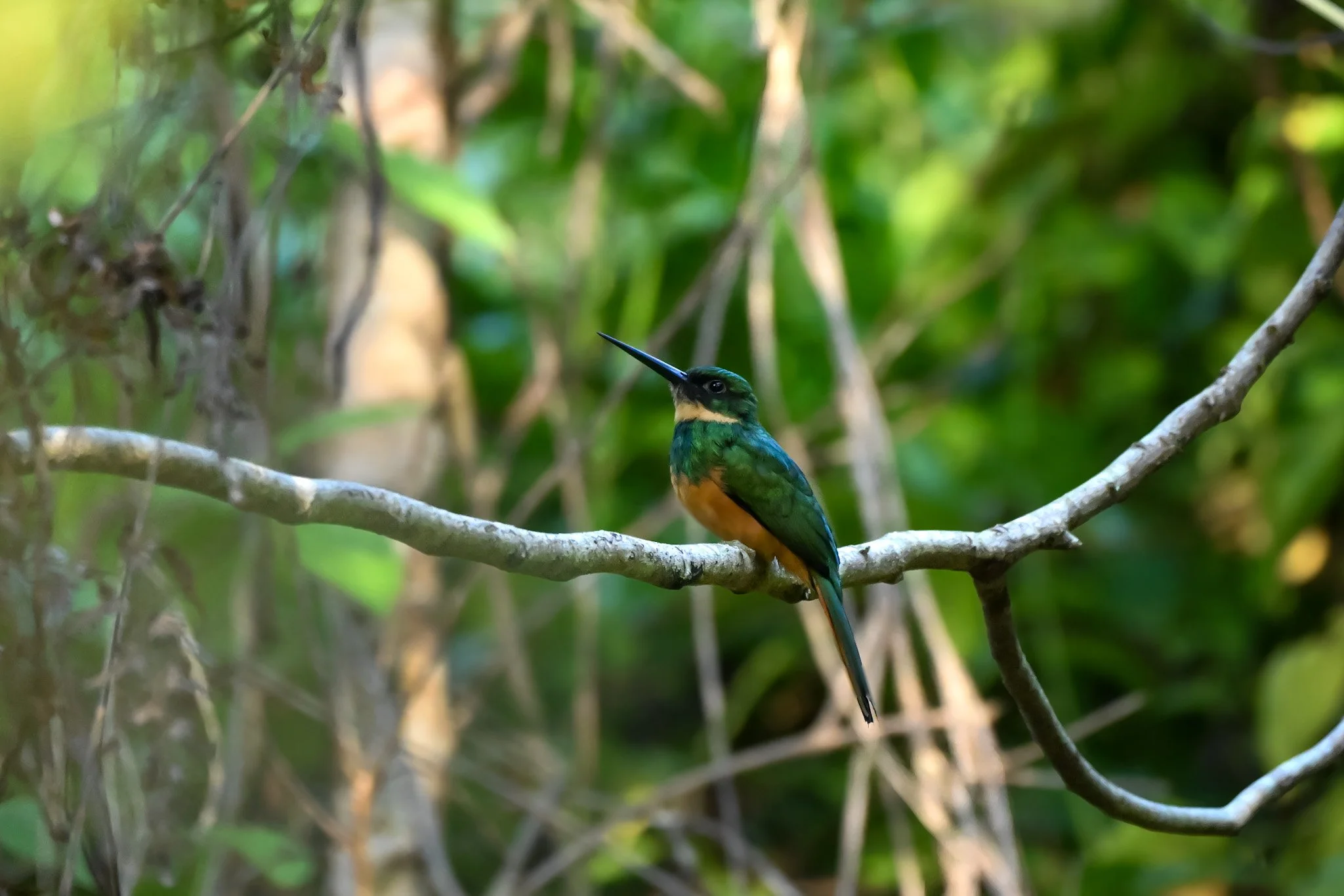
Rufous-tailed Jacamar (Quinta Leony)
A steep path leads up the mountain next to Quinta Leony. We could hear a Rufous-tailed Jacamar singing, so we scrambled up the path to see it.
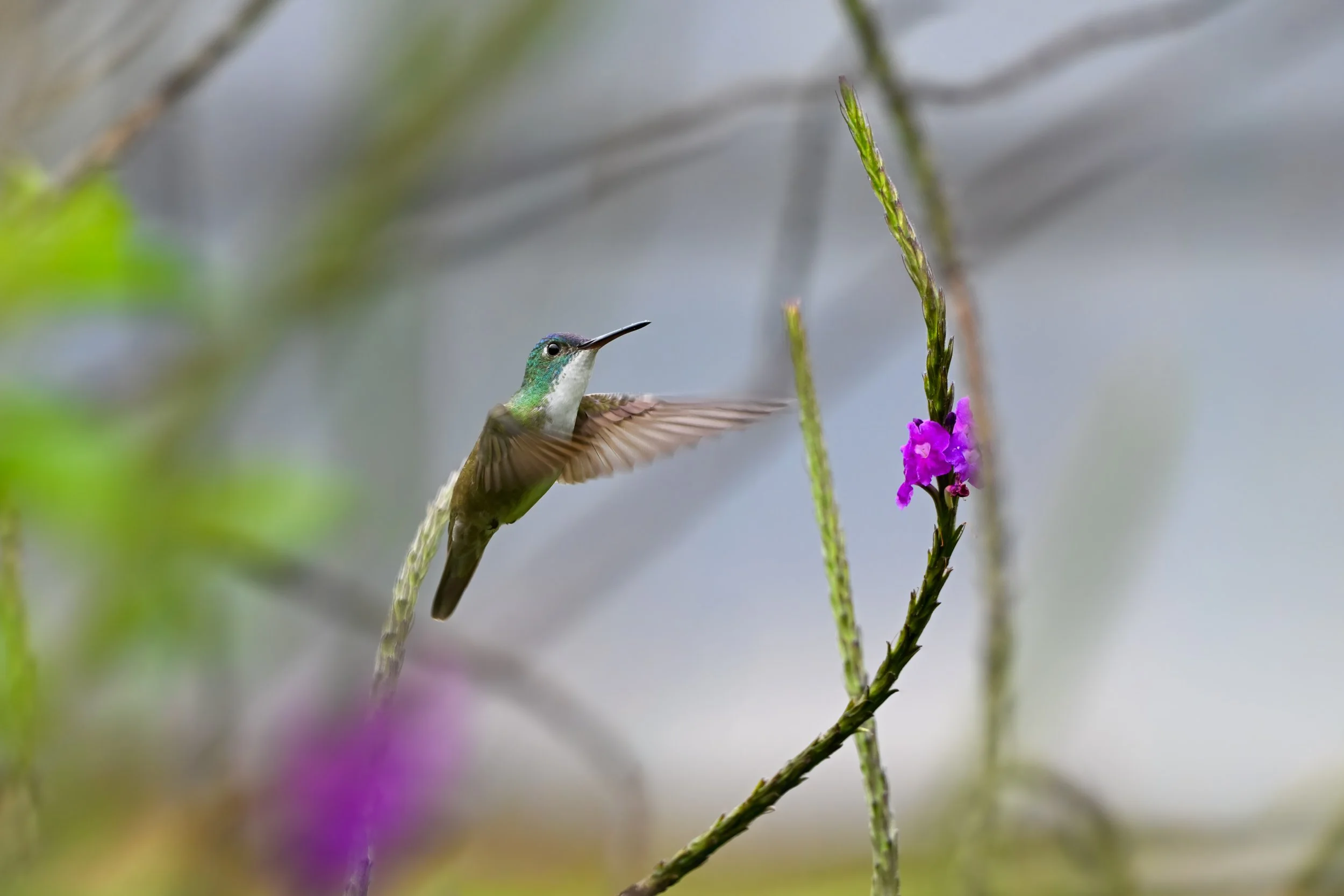
Azure-crowned Hummingbird (Bosque Dorado)
Bosque Dorado Nature Lodge is located at an altitude of 1,400 meters above sea level on the edge of the Montecillos Biological Reserve, surrounded by coffee plantations. Two hundred bird species have been recorded there. This was our last sanctuary of the trip. At breakfast, we could see the Azure-crowned Hummingbird from where we ate.
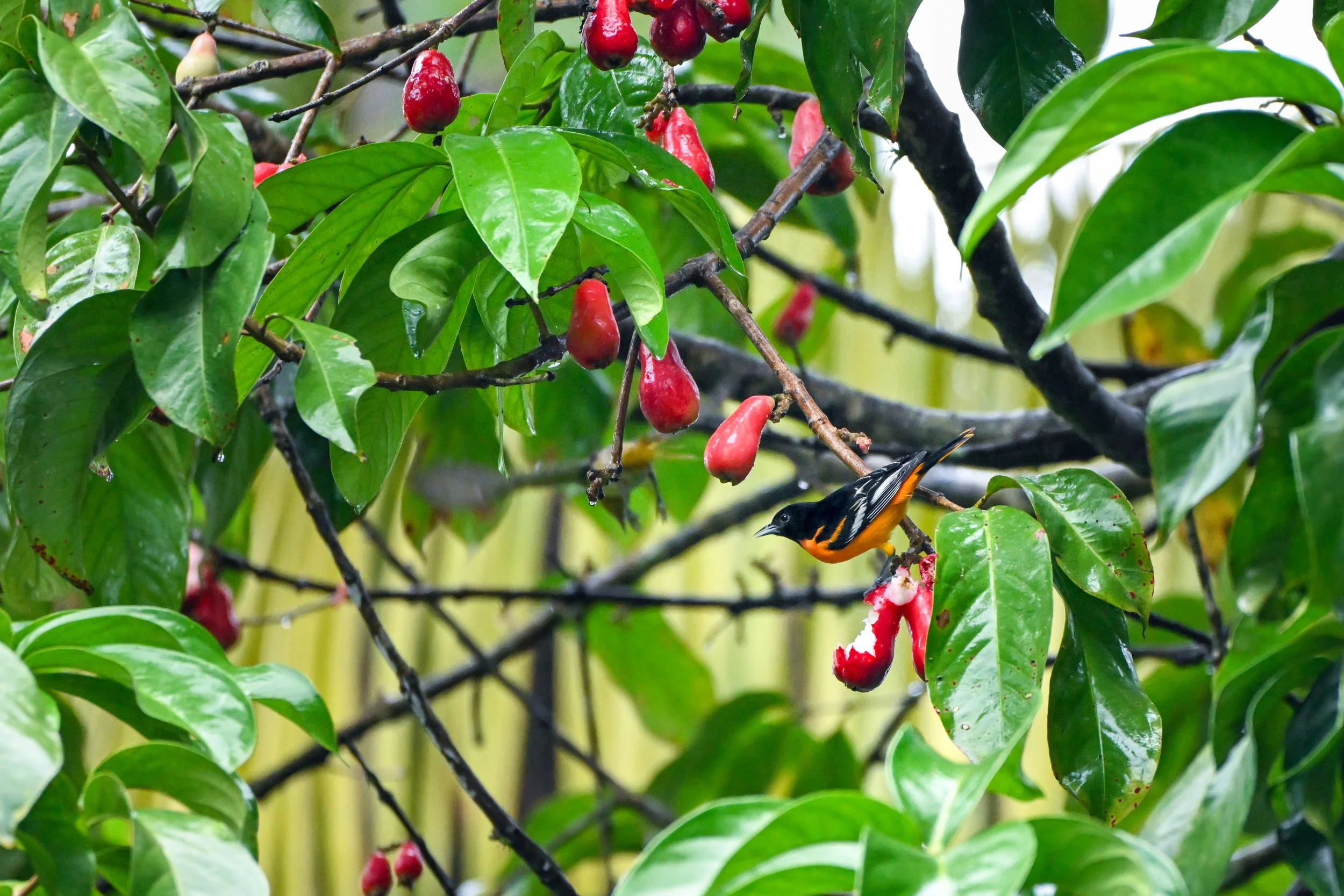
Baltimore Oriole with water apples (Bioparque Paradise)
At Bioparque Paradise, a sanctuary and private nature reserve, we met Denilson Ordonez, a young local birder trained by the US Forest Service and USAID to design and build hiking trails. The sanctuary is located between two protected areas, Azul Meámbar NP and Montaña de Santa Bárbara NP. Denilson showed us the Baltimore Oriole feasting on these water apples.
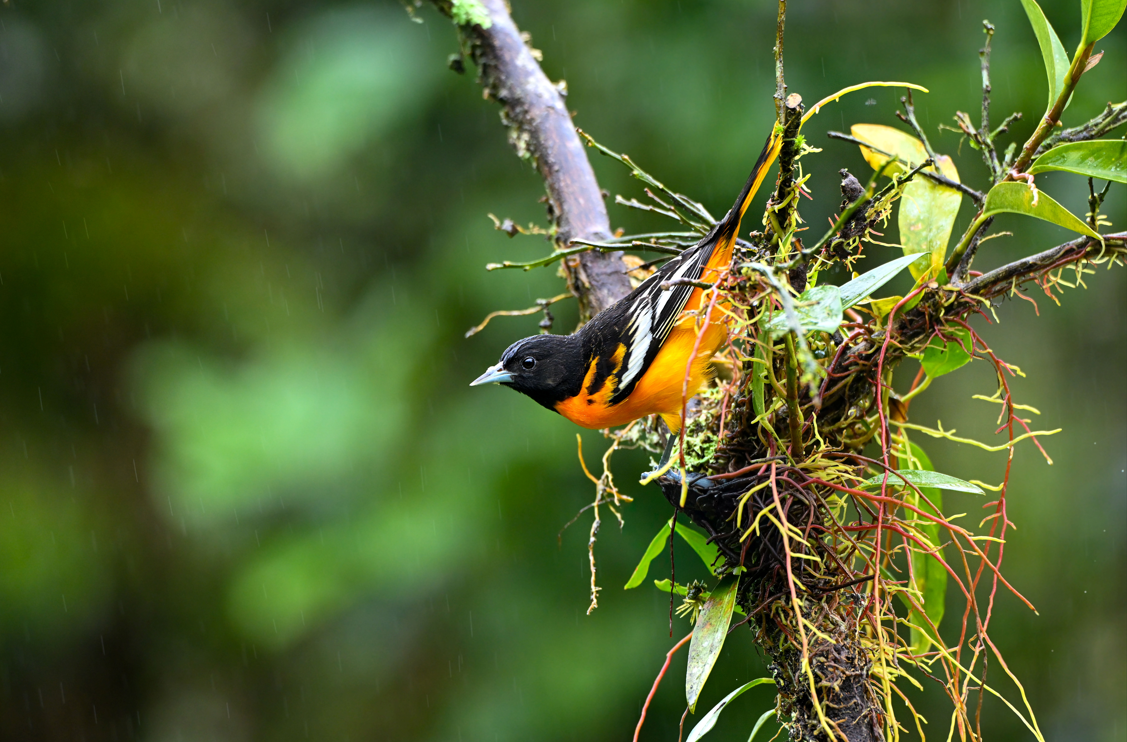
Baltimore Oriole (Luna del Puente)
Luna del Puente is the country's first bird sanctuary. It is also a charming farm that
produces cocoa, coffee, cardamom, and achiote. The latter is an essential condiment in Latin America, derived from the seeds of the Bixa orellana tree. From the bird blind here, we clearly saw the Baltimore Oriole in its winter habitat.
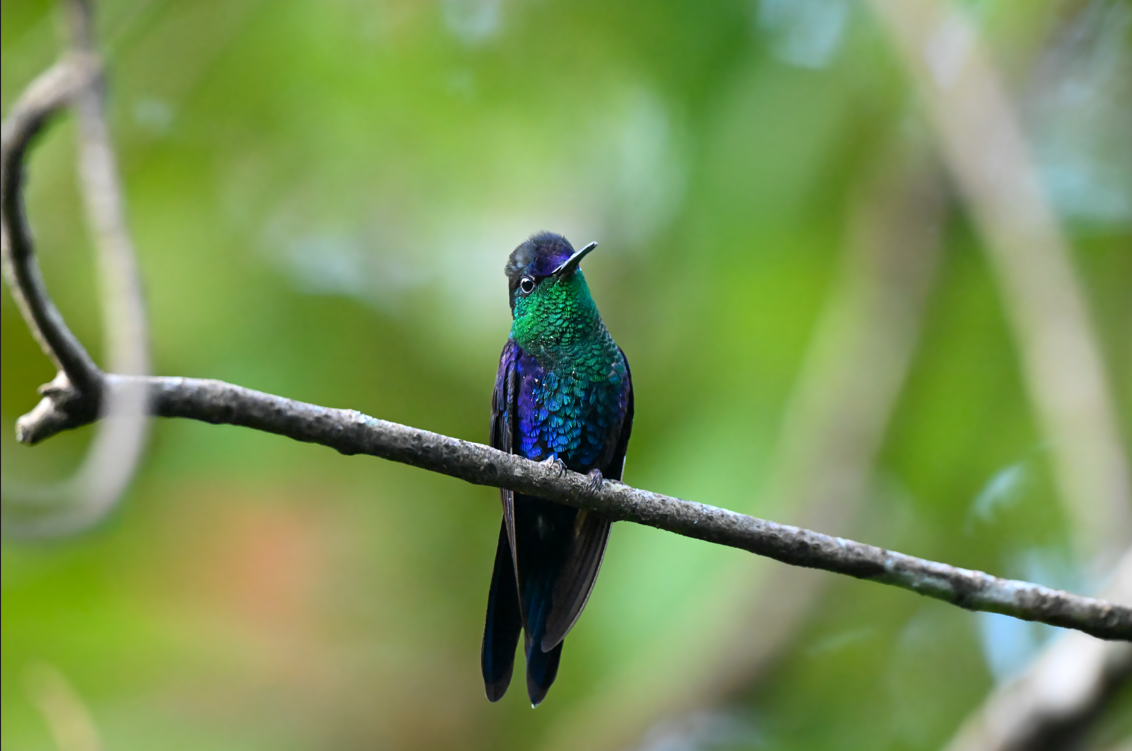
Crowned Woodnymph (Quinta Leony)
Quinta Leony is a private hummingbird sanctuary. We met the owner, who has developed a business collecting and distributing purified water from the source of a mountain stream, testing the water regularly. She has curated her property to be a bird sanctuary, open to visitors. Hiking up a steep mountain at the back of her property, we saw this Crowned Woodnymph.
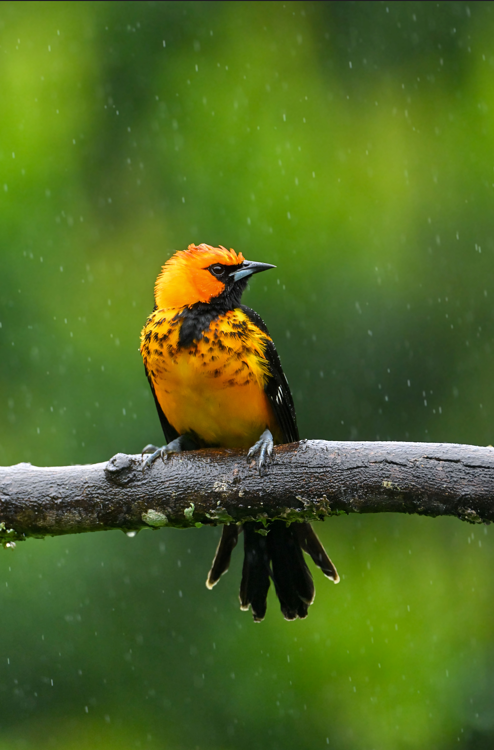
Spot-breasted Oriole (Luna del Puente)
Luna del Puente is a sanctuary that has developed a coffee plantation. The owners worked with Aves Honduras to build and install a bird blind, the first in Honduras, where we were able to view birds from a short but safe distance as they visited the feeders. It was from the blind that we saw this beautiful Spot-breasted Oriole.
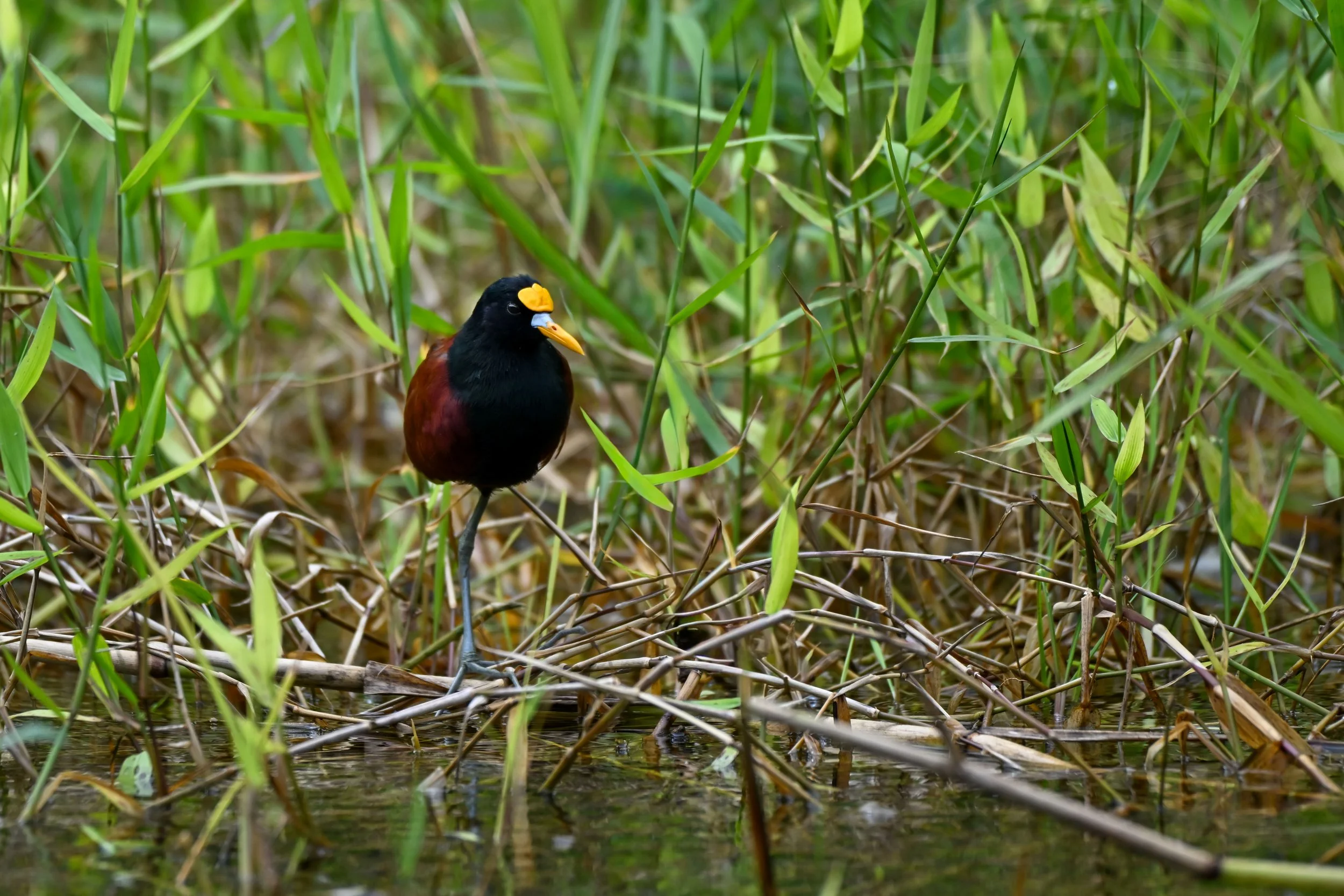
Northern Jacana (Yojoa Lake)
On our second boat trip, we visited Lake Yojoa, located in the central region of the country. We saw a multitude of beautiful shorebirds, including this Northern Jacana. His long toes are designed to displace his weight while walking on lily pads.
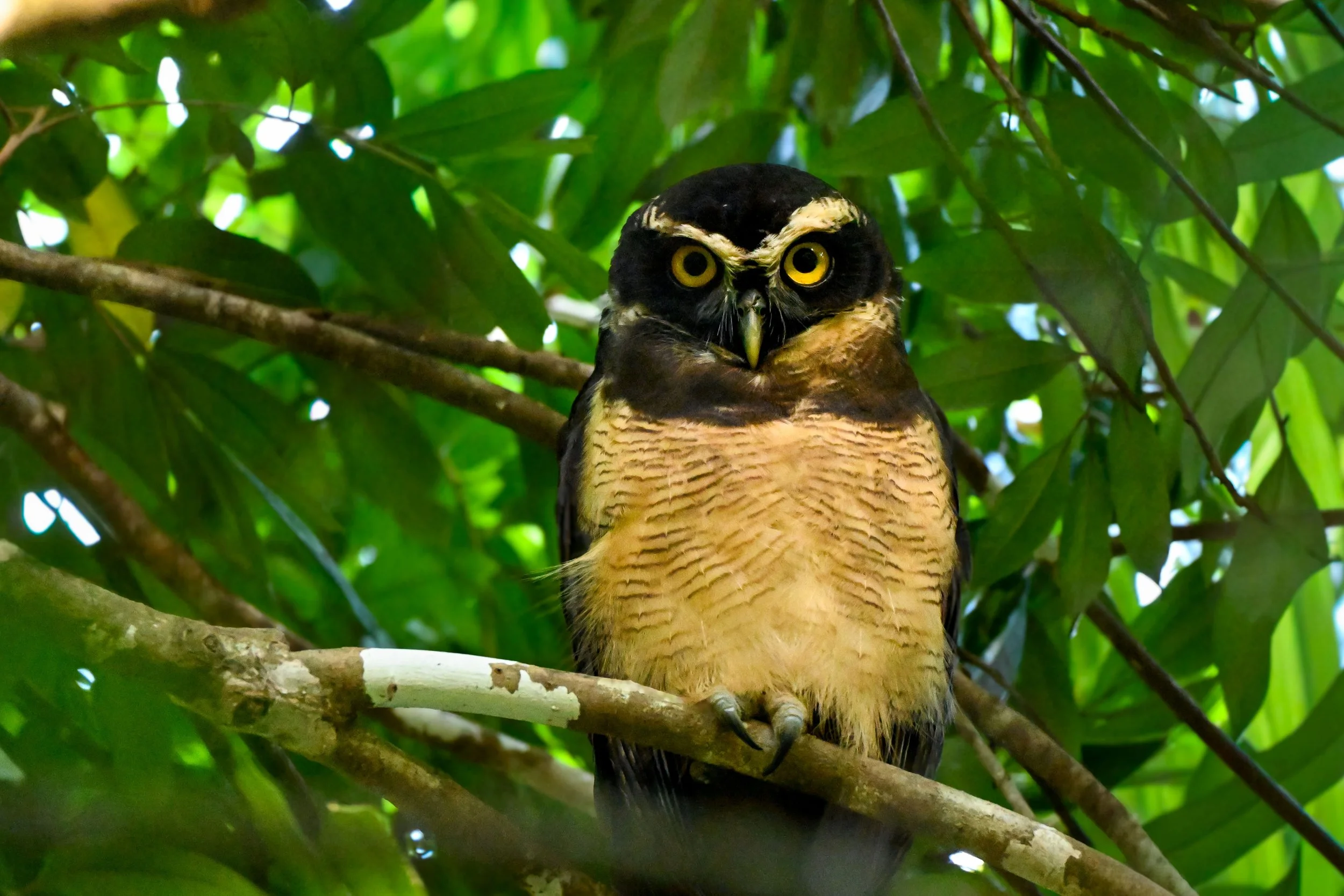
Spectacled Owl (Lancetilla Botanical Garden)
The spectacled owl is very shy. We were lucky that our guide knew a local birder, Iris, who tracks where the owls stay. Iris met us and took us through the botanical garden, sharing her local knowledge – an experience proving how important local guides are.
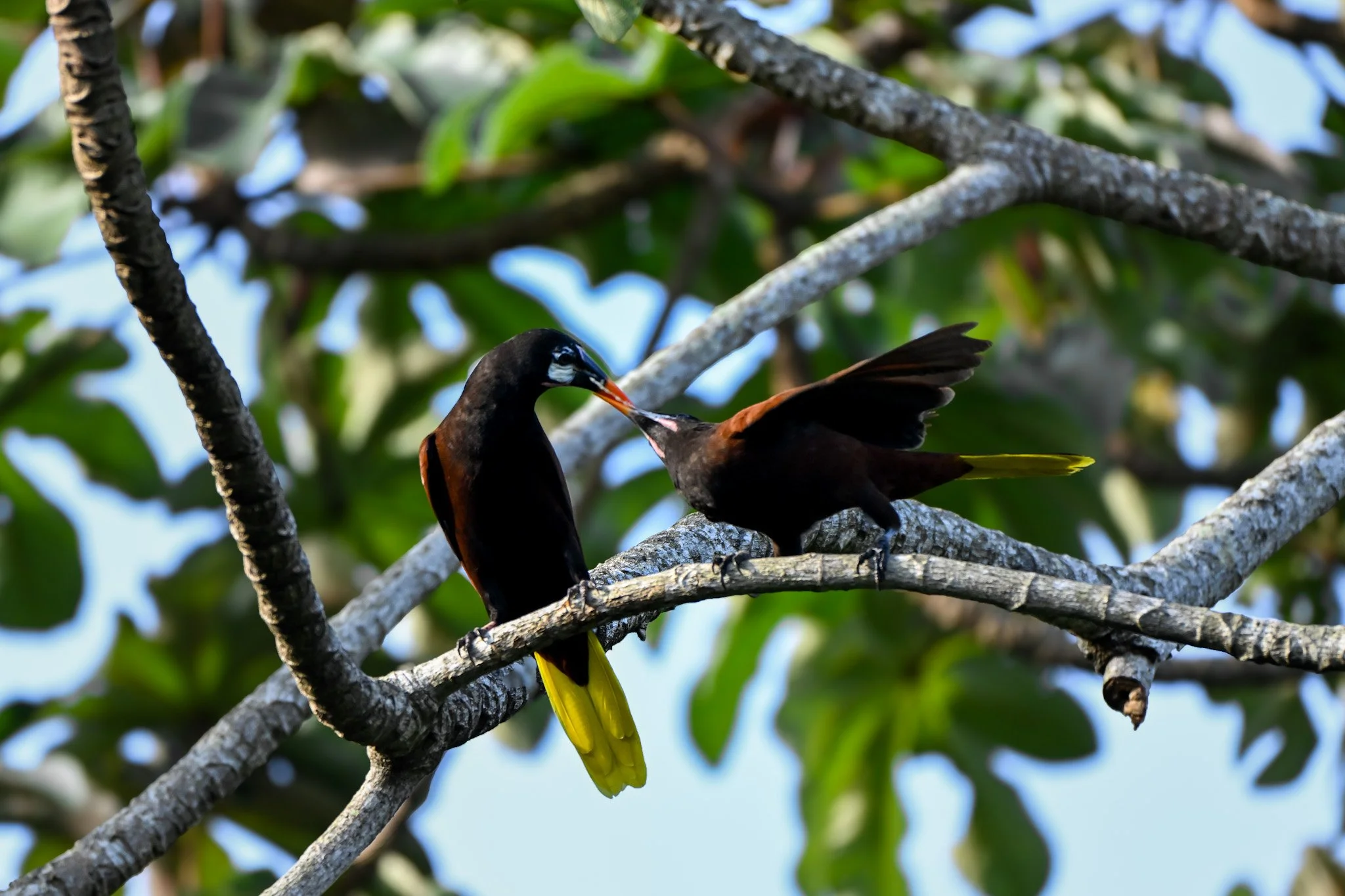
Montezuma Oropendola (Pico Bonito)
From the main lodge area in Pico Bonito, we watched one Montezuma Oropendola being fed by the other.
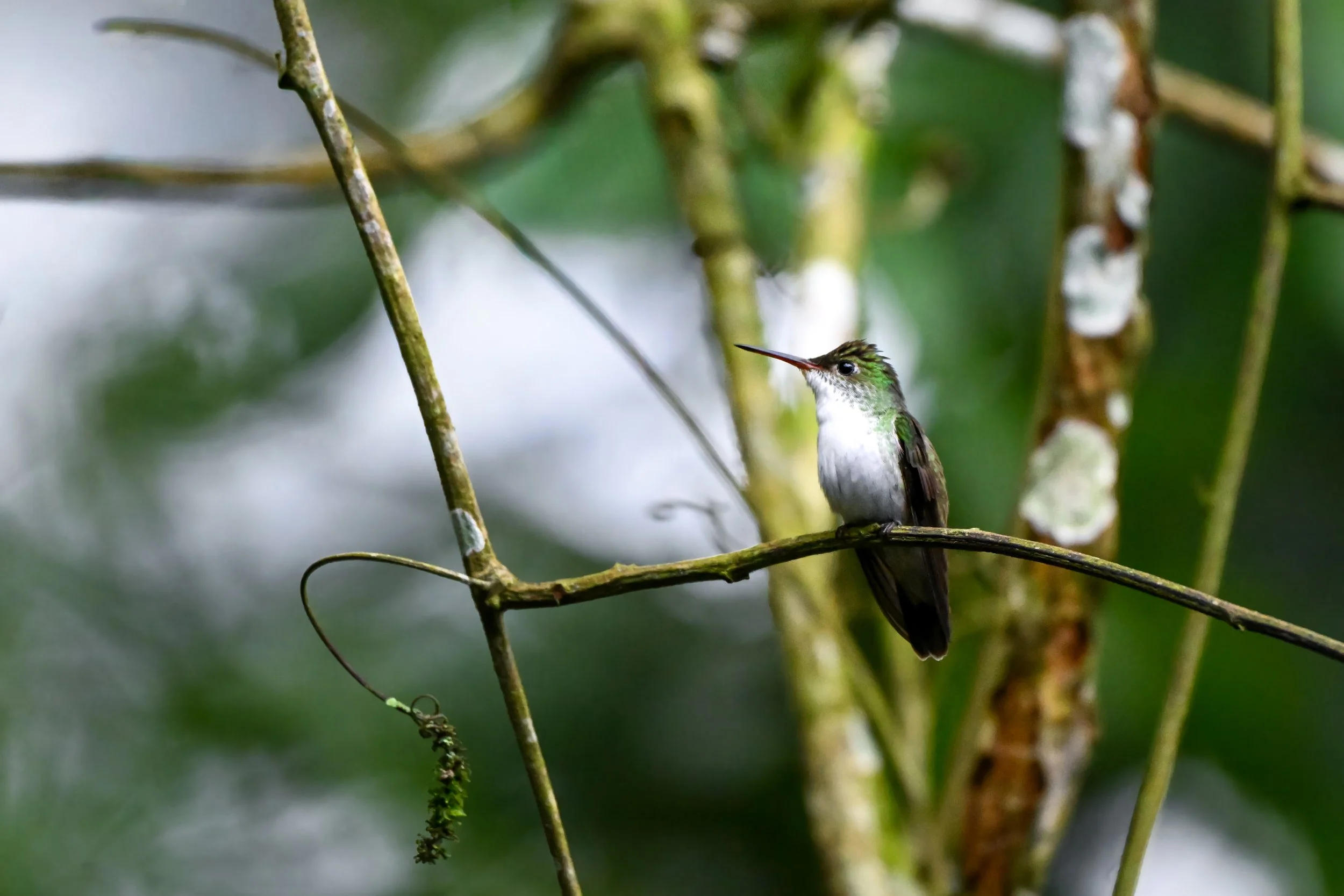
White-bellied Emerald (Pico Bonito)
On a pre-breakfast hike, we saw a White-bellied Emerald on the way back to the lodge.
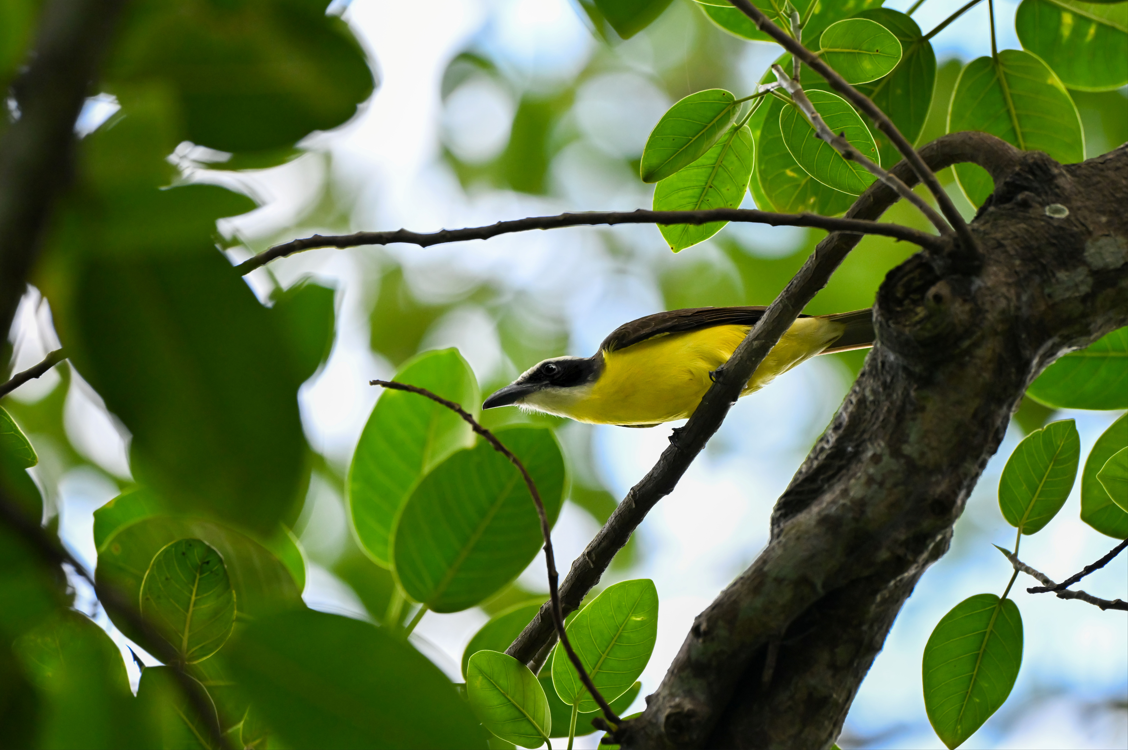
Boat-billed Flycatcher (San Pedro Sula)
Some of us had to wait a few hours for the flight. Our guide introduced us to a friend and local birding guide. We were taken all around the city, including to a small residential park where we spotted the Boat-billed Flycatcher.
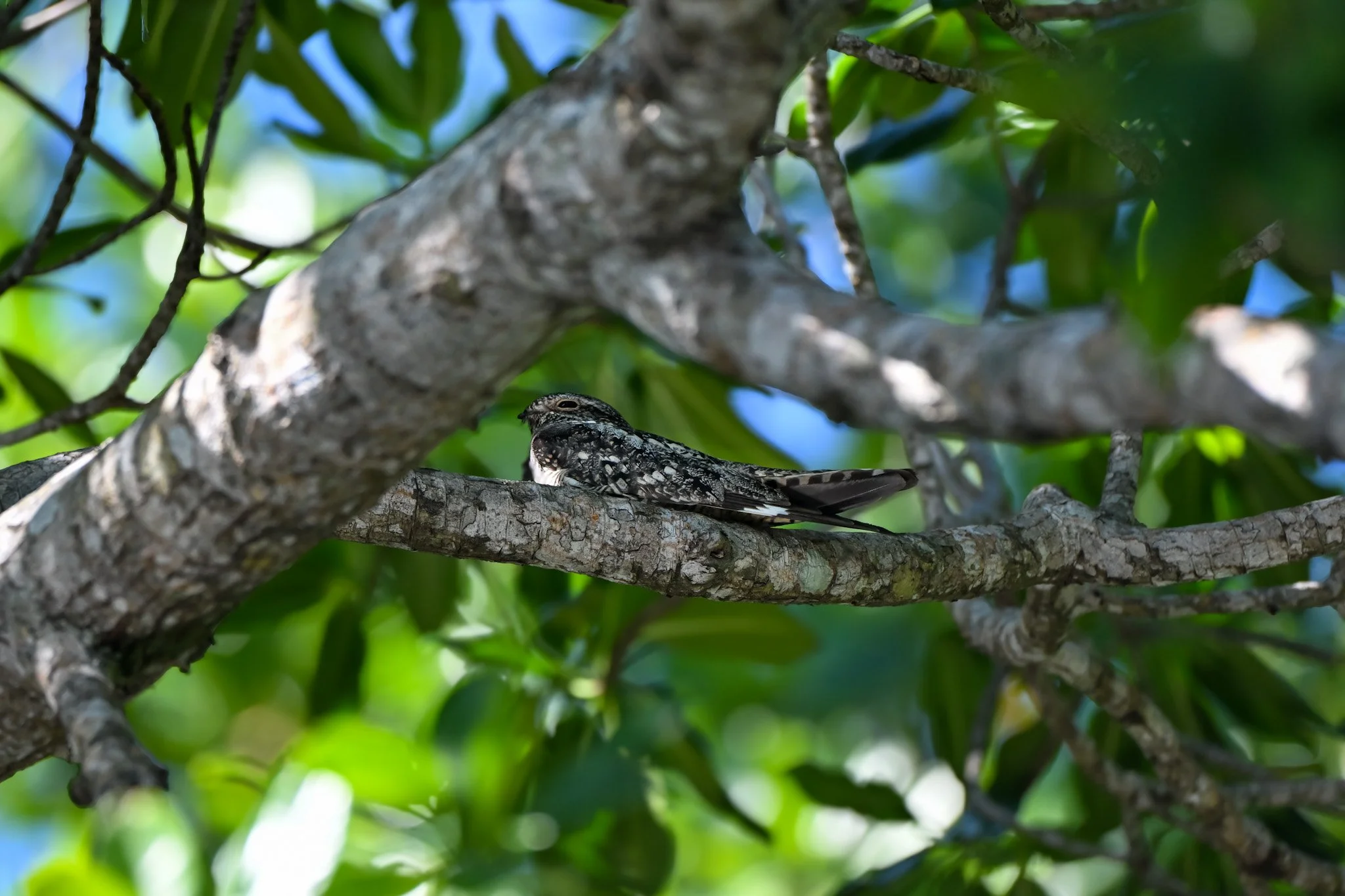
Lesser Nighthawk (Cuero y Salado Wildlife Refuge)
Our expert guide, Isis, somehow spotted this small bird across the river. We turned the boat around to meet her challenge to spot the Lesser Nighthawk.
Professional prints of these photographs are also available for purchase. Click here to view the pricing list. Please email info@northforkaudubon.org for more information about how to purchase these prints.